Will businesses be the answer to our post COP26 goals?
ARTICLE
COP26 wrapped up with flurry of pledges – including to wind down coal use worldwide, cut methane emissions, stop deforestation and accelerate the transition to zero-emissions vehicles. Experts agree that these latest promises are not enough to limit global temperature rise to 1.5°C. If all the net-zero pledges to date were realized – a big “If” –
estimates
from the UN Environment Programme suggest that the global temperature will increase by about 2°C.
In another
recent post
,
I noted the belief among Canadians and other publics around the world that we are collectively far off track to achieve net zero emissions by 2050. This skeptical outlook was well founded before COP26 and the events in Glasgow didn’t do much to disturb it.
All these realities could seem disheartening, but in my view, the bigger story of COP26 is the unity of purpose shown by the international community. Even just a few years ago, it would have been hard to imagine the sheer multilateral heft of what transpired at COP26. It’s true that the agreements fell short of what many had hoped. And not every country is moving at the same speed or with the same tools. But every single country is moving in the same direction to address the threat of climate change, including China and India. The international spotlight at COP meetings places enormous pressure on leaders. The latest gathering has resulted in an unprecedented unity of purpose globally; the power of that shouldn’t be underestimated.
Now is the time for follow-through. As the intense scrutiny of COP recedes, Canada and other countries need to implement their proposed plans and deliver on the commitments they made under the bright lights in Glasgow, showing accountability by transparently tracking their progress against their targets. Governments have a big role to play in this follow-through – but they’re not the only ones. The business community will also play a vital role, as business activity generates – or funds – much of the greenhouse gases emitted in Canada and around the world.
For most businesses in Canada, it would be a bold wager to bet against the unified direction in which the Canadian and world governments are moving. Regardless of where they lay their bets in terms of their own operations or investments, at a minimum firms need to be ready for enhanced climate disclosure requirements.
In addition to being mindful of the policy and regulatory contexts in which they operate and how investors see their activities, businesses also need to think about their customers. Even if their climate commitments are meaningful, most will have a hill to climb when it comes to building trust.
Our research shows that when it comes to climate information, public trust in business/industry and in business leaders is weak – on par with trust in politicians.
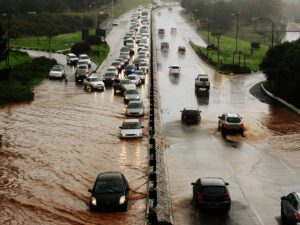
As public alarm about the effects of climate change grows – with events like the recent BC floods and mudslides accumulating at a breathtaking rate – many business leaders will want to be ready to demonstrate how they’re working to be part of the solution.
Navigating a new climate reality is not just about “selling” the story externally to shore up investor confidence or reassure customers. Of course businesses have businesslike motives, but they also have owners, employees, investors and board members who are people. A large and growing share of people on planet Earth – including in Canada – are very concerned about current and future climate change impacts. As economist and former Bank of Canada Governor Mark Carney has observed, people can decide that in addition to generating value in the conventional sense, businesses must also serve and reflect people’s values – environmental, social, or otherwise.
In the months ahead, Environics Research will be exploring public expectations of businesses with respect to emissions reductions and climate action, as well as the related social impacts. Among other topics, we’ll investigate public attitudes around the idea of a “just transition” for those whose livelihoods are most likely to be adversely affected by the move away from greenhouse gases to a low carbon economy.
Tags: