
Skip to content
Purple and gray Environics Research logo that links back to homepage
  • Industries
    • Advertising & Marketing
    • Corporate Affairs
    • Education Sector
    • Energy & Environment
    • Financial Services
    • Healthcare
    • Lifestyle & Culture
    • Mobility
    • Non-Profits
    • Public Sector
    • Sustainability
    • Tech & Digital Platforms
    • Travel & Tourism
    • Workplace Culture
  • Expertise
    • Social Values
    • Research
      • Qualitative
      • Quantitative
      • Advanced Analytics
      • Online Intelligence
    • Consulting
      • B2B Research
      • Brand Health & Strategy
      • Hard-to-Reach Audiences
      • International Research
      • Marketing Ideation
      • Product Innovation
      • Public Consultation & Engagement
      • Reputation Research
      • Stakeholder Engagement
      • Thought Leadership
      • Trend Consulting
      • Workshops
    • Solutions
  • Insights
    • Reports
    • Articles
    • Case Studies
    • News
  • About
    • Affiliations
    • Careers
    • Climate Action
    • Our Offices
    • Our Team
    • Privacy Policy
Contact Us
  • Industries
    • Advertising & Marketing
    • Corporate Affairs
    • Education Sector
    • Energy & Environment
    • Financial Services
    • Healthcare
    • Lifestyle & Culture
    • Mobility
    • Non-Profits
    • Public Sector
    • Sustainability
    • Tech & Digital Platforms
    • Travel & Tourism
    • Workplace Culture
  • Expertise
    • Social Values
    • Research
      • Qualitative
      • Quantitative
      • Advanced Analytics
      • Online Intelligence
    • Consulting
      • B2B Research
      • Brand Health & Strategy
      • Hard-to-Reach Audiences
      • International Research
      • Marketing Ideation
      • Product Innovation
      • Public Consultation & Engagement
      • Reputation Research
      • Stakeholder Engagement
      • Thought Leadership
      • Trend Consulting
      • Workshops
    • Solutions
  • Insights
    • Reports
    • Articles
    • Case Studies
    • News
  • About
    • Affiliations
    • Careers
    • Climate Action
    • Our Offices
    • Our Team
    • Privacy Policy
  • Home
  • /
  • Insights
  • /
  • Articles
  • /
  • The Finastra Data Breach

The Finastra Data Breach

How the Finastra data breach highlights trust in FinTech and how Social Values shape consumer responses to cybersecurity challenges.

Posted on:   Wednesday Dec 4th 2024

Article by:   Bernice Cheung

Trust, Data Sharing, and FinTech Segments


Learning about cybersecurity unfortunately has its real-world application. As I dive deeper into my cybersecurity course, I’m struck by how these lessons intersect with my work studying consumer behavior in financial services and FinTech’s at Environics Research. The recent Finastra data breach serves as a stark reminder of how critical trust and security are in this space—and how consumer reactions are shaped by their underlying Social Values.

The Finastra breach, which affected sensitive client data across over 8,000 institutions globally, underscores the vulnerabilities even major players face. On November 8th, 2024, Finastra disclosed unauthorized access to its Secure File Transfer Platform (SFTP), affecting sensitive client information. The hacker claimed to have stolen 400 gigabytes of data, highlighting vulnerabilities in even the most trusted systems. While Finastra acted quickly to mitigate the damage, I can’t help but think about how consumers will respond—especially when trust in online financial platforms already varies so widely. Our FinTech Syndicated Study helps to understand how Social Values shape trust, skepticism, and engagement in the FinTech world. This breach made me wonder, could Social Values help with a solution?


Segmental Trust and Data Sharing Attitudes

The Environics Research FinTech Syndicated Study provides deep insights into the attitudes, behaviors, and adoption patterns of Canadians toward financial technology. Based on responses from 2,000 Canadians, the study explores key factors influencing FinTech adoption, including trust, privacy concerns, generational differences, and the role of innovation.

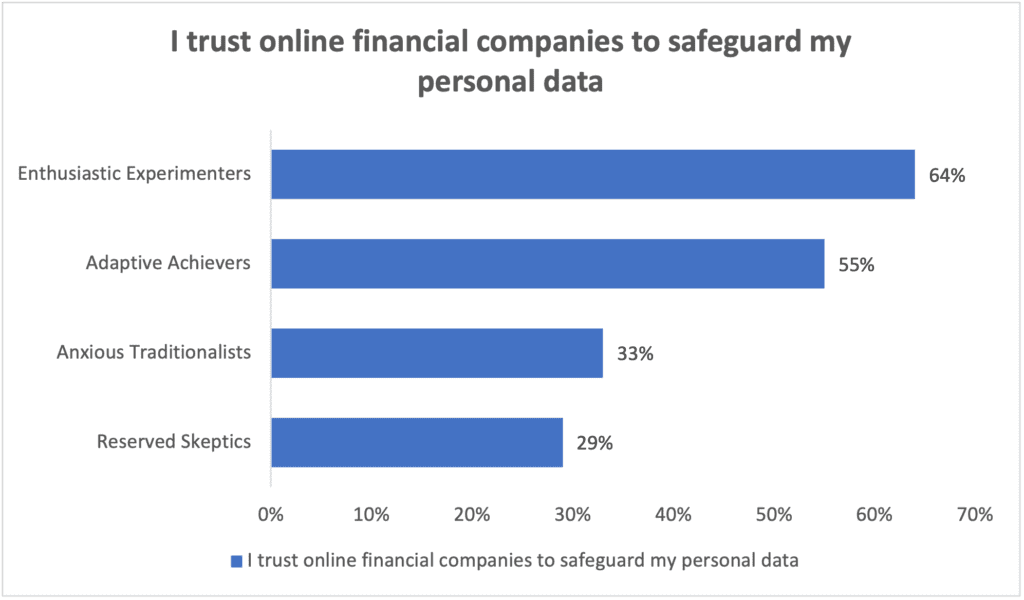
Consumer trust in online financial platforms varies significantly by our FinTech segments, as does their willingness to share data for convenience. When asked, “I trust online financial companies to safeguard my personal data,” agreement levels revealed stark differences:

On the question, “I’m willing to share my information if I can get more convenient products and services in return,” the responses similarly highlight contrasting attitudes:
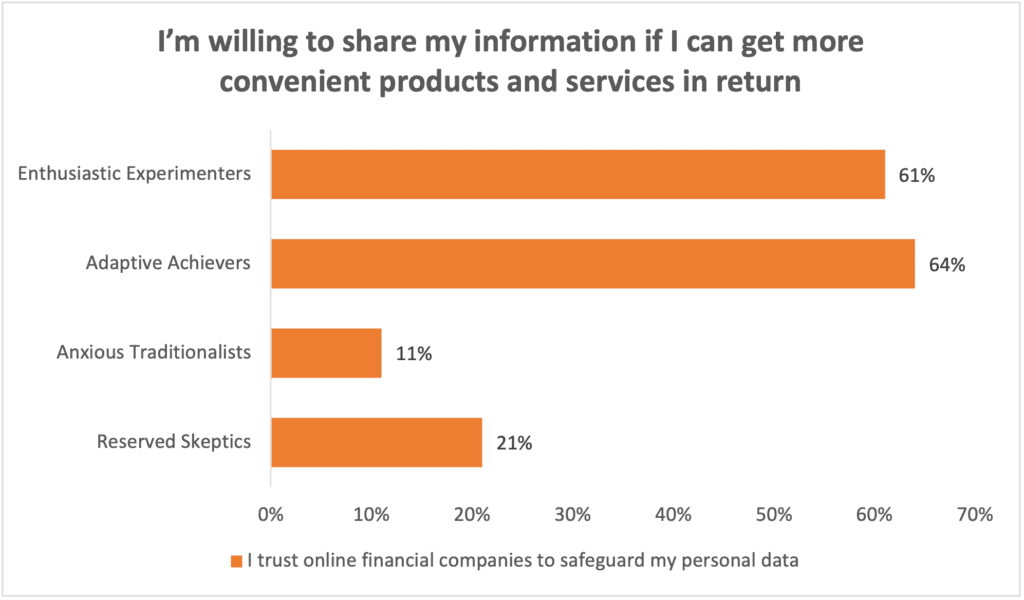
These insights reveal a critical paradox: segments like Enthusiastic Experimenters and Adaptive Achievers are more willing to share data for better services, while Anxious Traditionalists and Reserved Skeptics are deeply cautious. However, as the Finastra breach demonstrates, even those who avoid sharing personal data can be affected due to the interconnectedness of financial systems. This reality underscores the importance of securing data throughout the ecosystem, including third-party providers.



Segmental Responses to the Breach

  1. Enthusiastic Experimenters

Top Social Values

Enthusiasm For New Technology

Personal Creativity

Pursuit Of Novelty

Consumption Evangelism

Response to the Breach:
This group values innovation and efficiency, so a breach may feel like a technological failure rather than a dealbreaker. They’ll remain engaged if they see rapid improvements in security and functionality.

What Banks Need to Do:

  • Showcase cutting-edge cybersecurity enhancements, such as real-time threat detection.
  • Maintain transparency about ongoing improvements to rebuild confidence.
  • Innovate quickly to minimize disruptions and address their desire for novelty and time efficiency.

  1. Adaptive Achievers

Top Social Values

Need For Status Recognition

Attraction To Crowds

Ostentatious Consumption

Penchant For Risk

Response to the Breach:
This group balances their appetite for innovation with a need for visible reassurances. A breach not only undermines their trust in security but also their perception of the brand’s prestige.

What Banks Need to Do:

  • Reinforce the bank’s leadership in cybersecurity through certifications or partnerships with top providers.
  • Communicate transparently about how the issue has been resolved, offering detailed audits.
  • Introduce exclusive, high-value features that combine innovation with security to appeal to their desire for status and novelty.

  1. Anxious Traditionalists

Top Social Values

Control Of Privacy

Technology Anxiety

Skepticism Towards Advertising

Aversion To Complexity

Response to the Breach:
For Anxious Traditionalists, a breach validates their fears about technology and data security. They are likely to disengage further unless the institution provides strong reassurances.

What Banks Need to Do:

  • Prioritize privacy-focused solutions with minimal data collection and user-friendly controls.
  • Partner with trusted, established organizations to enhance credibility.
  • Use simple, jargon-free messaging to align with their preference for stability and simplicity.

  1. Reserved Skeptics

Top Social Values

Emotional Control

Utilitarian Consumerism

Cultural Assimilation

Brand Apathy

Response to the Breach:
Reserved Skeptics are pragmatic and disengaged, requiring clear, consistent proof of improvements before they consider re-engaging. For this group, quick fixes and marketing campaigns won’t suffice.

What Banks Need to Do:

  • Provide consistent updates on measurable improvements in data protection.
  • Offer practical tools for managing privacy and data sharing to empower this segment.
  • Focus on reliability and function rather than branding or innovation.

Why Understanding Social Values Matters

The Finastra breach underscores how differently consumer segments respond to cybersecurity incidents, driven by their unique Social Values. Some, like Enthusiastic Experimenters and Adaptive Achievers, need innovation and exclusivity to restore trust, while others, like Anxious Traditionalists and Reserved Skeptics, demand simplicity and practical evidence of security improvements.

For me, this is where the FinTech Syndicated Study stands out. By exploring the Social Values underpinning consumer behavior, it gives financial institutions a roadmap to anticipate needs, rebuild trust, and create tailored strategies. Trust isn’t one-size-fits-all—understanding the “why” behind behavior is essential to addressing the “what.”

As I merge my cybersecurity studies with my work, I see the transformative potential of these insights for financial clients. Social Values offer a deeper understanding of what matters most to consumers, empowering institutions to design solutions that not only address immediate concerns but build stronger, lasting relationships in a rapidly evolving industry.

Bernice Cheung Headshot
Email Bernice
Visit LinkedIn

Bernice Chung

VP – Cultural Markets & Financial Services


Reach out to learn more

Learn how our team of industry experts can support your business needs.

Contact Us

Tags:

Industry Trends

More Articles

Article

Thought Leaders

Financial Literacy Month 2024

11/29/24

Bernice Cheung

Article

Solutions

Understanding FinTech Adopters In Canada

01/31/25

Bernice Cheung

Article

Segmentation

Who’s Driving the Surge in FinTech Brand Awareness & Usage?

05/23/24

Bernice Cheung

    About

  • Contact
  • Offices

Social

  • Linkedin
    LinkedIn
  • Youtube
    YouTube
  • facebook
    Facebook

    Featured

  • Canadian Travel & Tourism Report
  • Canada Energy Superpower Report
  • Millennials Segmentation Report

    Policies

  • Privacy Policy

Environics Research © 2025. All Rights Reserved.

Environics Social Values

Environics Social Values